When you think of Bihar today, mathematics might not be the first thing that pops into your head. But for nearly 1,500 years, this region has been a factory for mathematical genius. It is a story of extreme highs and heartbreaking lows—from ancient astronomers who mapped the stars to modern prodigies who lost their minds.
Here is the non-textbook version of how Bihar shaped the world of numbers.
The Original Giant: Aryabhata
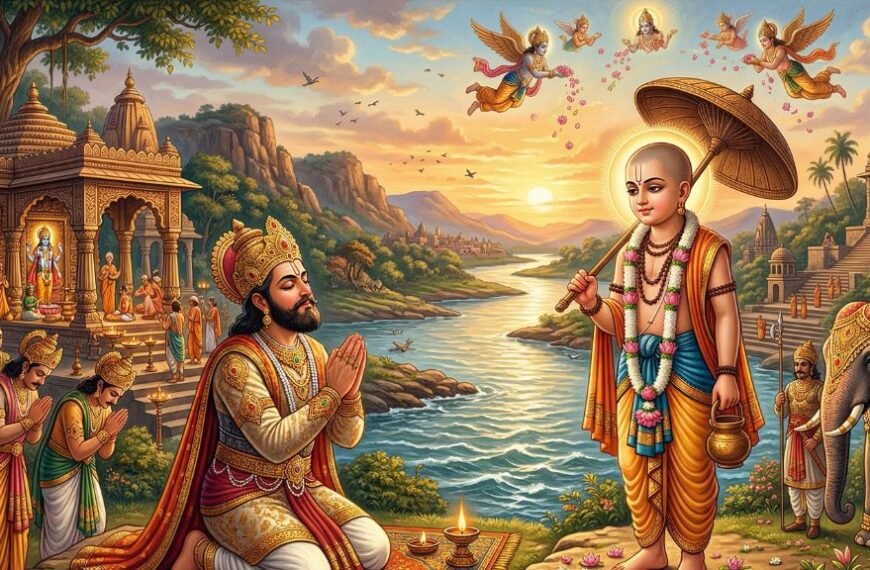
AI Image
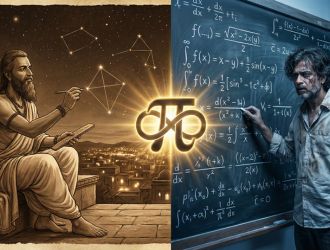
Long before Europe had its scientific awakening, a man named Aryabhata (476–550 CE) was sitting in Kusumapura (modern-day Patna) rewriting the rules of the universe. He wasn’t just doing homework; he was heading a major astronomical observatory.
Aryabhata was the first to confidently say that the Earth rotates on its axis, explaining why the stars seem to move. He calculated the value of Pi (π) to four decimal places (3.1416), which was unheard of at the time. While the world was debating flat earths and geocentric models, he was using trigonometry to track planets. He set the standard. If you are a mathematician in Bihar, this is the ancestor you are trying to live up to.
The Tragic Hero: Vashishtha Narayan Singh
If Aryabhata is the god of Bihari math, Vashishtha Narayan Singh is its tragic hero. His story is the stuff of movies—brilliant, beautiful, and devastating.
Born in a village called Basantpur, Vashishtha was a “human computer” long before the term existed. He studied at Netarhat Vidyalaya, a legendary residential school in the Jharkhand hills (then Bihar) that churned out toppers like a factory.
His genius was undeniable. When he got to Patna Science College, he was so ahead of his peers that the university had to change its rules. They allowed him to appear for his B.Sc. and M.Sc. exams in rapid succession because the regular classes were wasting his time.
In the 1960s, he moved to the USA to study at the University of California, Berkeley. He wrote a PhD thesis on something called “Reproducing Kernels and Operators with a Cyclic Vector”. It sounds complicated because it is—it’s high-level functional analysis used in quantum mechanics. He even worked briefly at prestigious places like NASA and the University of Washington.
The Myth and the Madness Legends grew around him. People in Bihar will tell you he challenged Einstein’s theory of relativity or that when NASA’s computers crashed during the Apollo mission, Vashishtha did the calculations in his head and they matched perfectly. While these are likely myths born out of admiration, they show how much people respected his mind.
But then, tragedy struck. In the mid-1970s, Vashishtha was diagnosed with schizophrenia. The mind that could understand infinite vector spaces began to fracture. He returned to India but eventually disappeared from a train in 1989. For four years, a man who had walked the halls of Berkeley wandered the streets of Bihar in rags. He was eventually found and brought home, but he never fully recovered. He passed away in 2019, a genius who gave everything to math until he had nothing left.
The “Super” Teacher : Anand Kumar
In the 2000s, the narrative shifted. The hero wasn’t a researcher anymore; it was the teacher.
Anand Kumar is likely the face you know. His story is about resilience. He secured admission to Cambridge University as a young man but couldn’t go because his father died and the family didn’t have the money. Instead of becoming bitter, he started Super 30.
The concept was simple but radical: take 30 brilliant students from the poorest families—rickshaw pullers, laborers, landless farmers—feed them, house them, and teach them physics and math for free. His goal was the IIT Joint Entrance Exam (JEE), one of the toughest tests on Earth.
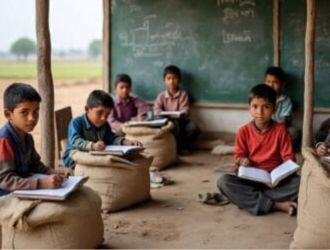
It worked. Year after year, his students—kids who often hadn’t seen a computer—cracked the exam, landing spots in India’s top engineering colleges. He proved that mathematical talent isn’t about money; it’s about opportunity.
The Prodigy: Tathagat Avatar Tulsi
Bihar also gave us Tathagat Avatar Tulsi, a boy who defied age limits. He finished high school at 9, his B.Sc. at 11, and his M.Sc. at 12 from Patna Science College. By 21, he had a PhD from the Indian Institute of Science (IISc), working on Quantum Search Algorithms.
Like Vashishtha, his journey hasn’t been smooth sailing in the academic job market, showing that being a “whiz kid” is a heavy burden to carry into adulthood.
The Legacy Continues
Walk into any classroom in Bihar today, and you will likely see a copy of a textbook by Dr. K.C. Sinha. He is the “textbook king” of the state, bridging the gap between average students and the difficult concepts needed for engineering exams.
From the ancient observatories of Patna to the cramped coaching centers of today, the thread remains unbroken. Bihar might struggle with economics or infrastructure, but in the abstract world of mathematics, it remains a land of giants.

 By
By
 By
By


 By
By